Sample piece for layout review. Background, not a news report. Replace this file before launch.
Bitcoin · Guide · Sample
What is a Bitcoin halving?
The halving is a scheduled cut in the new bitcoin created with each block. It is a supply rule, not a forecast, and it does not tell anyone to buy or sell.
Information only. Not investment, tax, or legal advice.
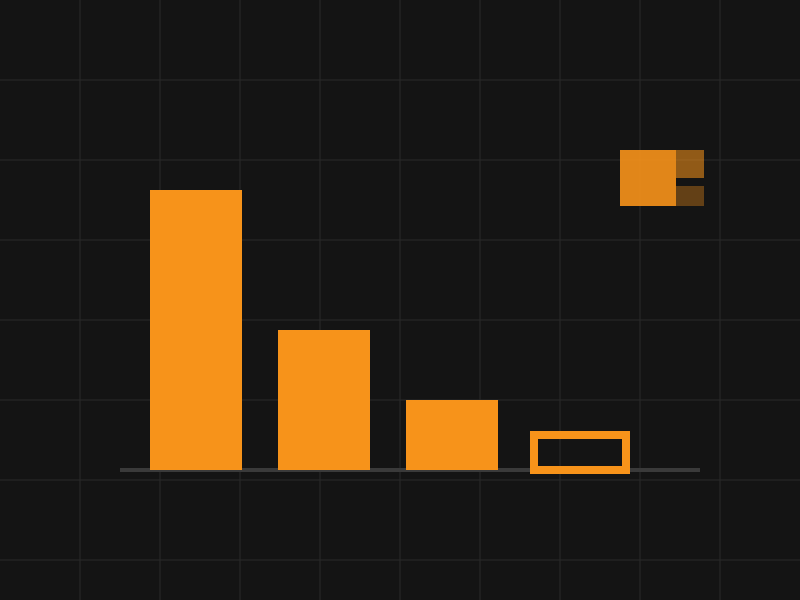
The halving is a rule in Bitcoin’s protocol. On a fixed schedule of blocks, the number of new bitcoin created with each block is cut in half. It is a supply rule. It is not a forecast, and it does not instruct anyone to buy or sell.
The short version
Bitcoin’s bookkeeping happens in blocks. Each block can include a special first transaction, called the coinbase, that creates new bitcoin and pays it to the miner who found the block. That payment is the block subsidy.
The subsidy started at 50 bitcoin. Every 210,000 blocks it falls by half: 25, then 12.5, then 6.25, then 3.125. The halving at block 840,000, in April 2024, is the one that set the subsidy at 3.125 bitcoin. The next cut is block 1,050,000, when the subsidy becomes 1.5625 bitcoin.
Why a calendar date is the wrong clock
The protocol counts blocks, not days. Bitcoin aims for a new block about every ten minutes, so 210,000 blocks is roughly four years. If blocks arrive faster or slower, the calendar date moves and the block height does not. Anyone offering a precise day for the next halving is estimating. The chain itself will not halve until it reaches that block.
What miners actually lose
Only the subsidy is cut. Miners can still collect fees from the transactions they include. The Bitcoin whitepaper describes the subsidy as a way to distribute coins at the start, with fees able to carry the incentive later. A halving does not delete old coins, move the 21 million cap, or rewrite history. That cap is what you get by adding up this shrinking subsidy from the beginning. It is not a separate switch that someone throws.
What a halving does not do
It does not set a price. Price is whatever buyers and sellers agree in the moment, on many different venues. A smaller flow of new coins can matter to people who study supply. It can also be ignored. Earlier halvings are not a template. This piece does not claim that a rally is due, overdue, or unlikely.
It also does not change how coins are held. Keys, backups, and the difference between a custodial account and holding your own keys are the same the day before and the day after.
How to follow it without the noise
Watch the block height, which any full node can report, and compare it with the next multiple of 210,000. Treat countdown clocks on other websites as estimates. The primary descriptions are the whitepaper, for the incentive, and the protocol rules, for the schedule. The links under this piece are the references this explanation is drawing from.