Sample piece for layout review. Background, not a news report. Replace this file before launch.
DeFi · Guide · Sample
What is a decentralized exchange?
A decentralized exchange lets people swap tokens through software on a public network, instead of handing coins to a company that keeps the order book.
Information only. Not investment, tax, or legal advice.
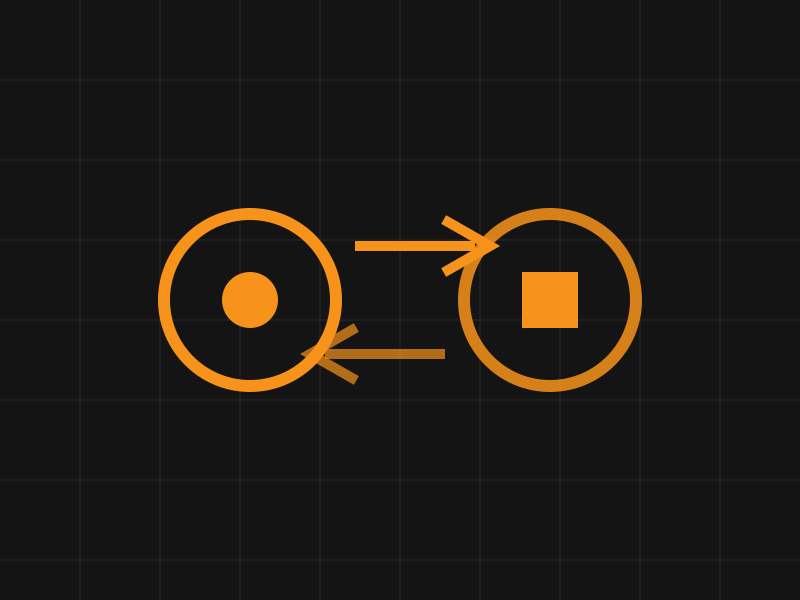
A decentralized exchange, often shortened to DEX, is software on a public blockchain that lets people swap tokens with each other. The swap is handled by a program — a smart contract — rather than by a company that takes the coins into its own account first.
A desk that keeps the coins, and one that does not
On a typical centralized exchange you deposit coins with the company. The company updates an internal ledger and, later, sends coins out if you withdraw. You are trusting that company to stay solvent, to process the withdrawal, and to secure its database.
On a decentralized exchange the swap is a transaction you sign with your own keys. The contract enforces the terms written into it: which assets, which pool or order book, which fee. There is no account manager. There is also nobody to call if you sign the wrong transaction.
Two shapes you will see
Some decentralized exchanges keep an order book. Bids and offers match when prices cross, much like a familiar trading screen, except the matching runs on the network.
Others use an automated market maker. People deposit a pair of assets into a shared pool, and a formula quotes a price that moves as the pool becomes unbalanced. You do not need the formula to understand the idea. The pool is the counterparty. The price is a result of what is in the pool, not of a specialist on a trading floor.
Both designs still depend on the underlying network. If the chain is congested, a swap waits. If the contract can be paused or upgraded by whoever holds an admin key, the word “decentralized” deserves a closer look. The word describes a mechanism. It is not a medal.
Risks that do not go away
A contract can be wrong. Reviews miss things. A token can be a counterfeit copy of a name you recognise. Giving a contract permission to spend your tokens can be abused if the contract is malicious. The pool can move sharply while your transaction is waiting, which traders call slippage.
None of this is a reason to pretend these venues do not exist. None of it is a reason to treat them as safer than a regulated broker. The risks are different, and they sit with the person holding the keys.
This piece does not walk through a trade, and it does not name a platform to use. The point is the category.
What to read before a thread
Ethereum’s own documentation describes decentralized finance as applications that run without a central operator, exchanges included. Read that before you read a thread. Separate the question “how does a swap work?” from the question “should I swap anything today?”. This desk does not answer the second one.